A landscape architecture reference covering the viale typology, century-old planting records, replanting frameworks, and the measurable cooling role of canopy cover in Italy's urban fabric.
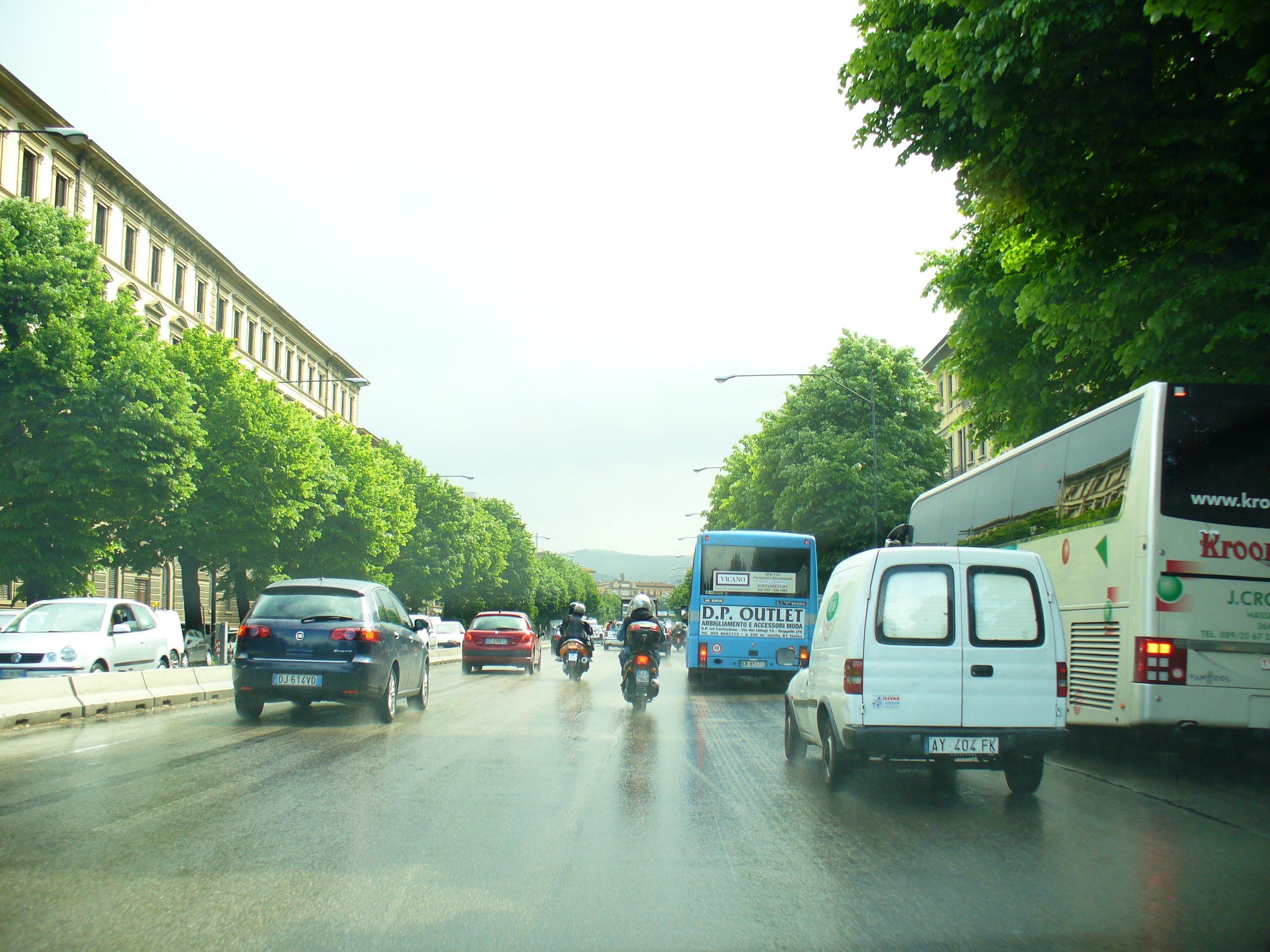
Florence's Viali di Circonvallazione, traced over former Medici-era fortification walls in 1865, established a benchmark for Italian boulevard design that Milan, Turin, and Bologna adapted in the following decades. The formal double-row planting of Platanus × acerifolia along these routes was not incidental — it was a deliberate engineering choice driven by canopy closure rates and root-zone tolerances in compacted urban subsoils.
Read the full studyPublished research from Lecce, Padova, and a 10-city Italian study provides concrete temperature data on how boulevard canopies perform during summer heat events.
Air temperature reduction attributable to 30% urban tree canopy cover, across 10 Italian cities (Nature npj Urban Sustainability, 2025).
Median reduction in heatwave severity under a minimum 30% canopy scenario — with some city-level figures reaching 84% (CNR Italy, 2025).
Daytime temperature difference between open impervious surfaces and shaded tree-canopy zones recorded in Padova (University of Padova, 2022).
Milan's monumental-tree registry documents plane trees rooted as early as 1773, with trunk circumferences exceeding 620 cm. These specimens anchor replanting decisions: municipalities select same-species or structural-equivalent successors to preserve canopy continuity along corridors that took 150 years to mature.
Species Records
For enquiries about the content, data sources, or corrections to the species records, write to the editorial address.