Urban Microclimate Function of Canopied Avenues in Summer Heat
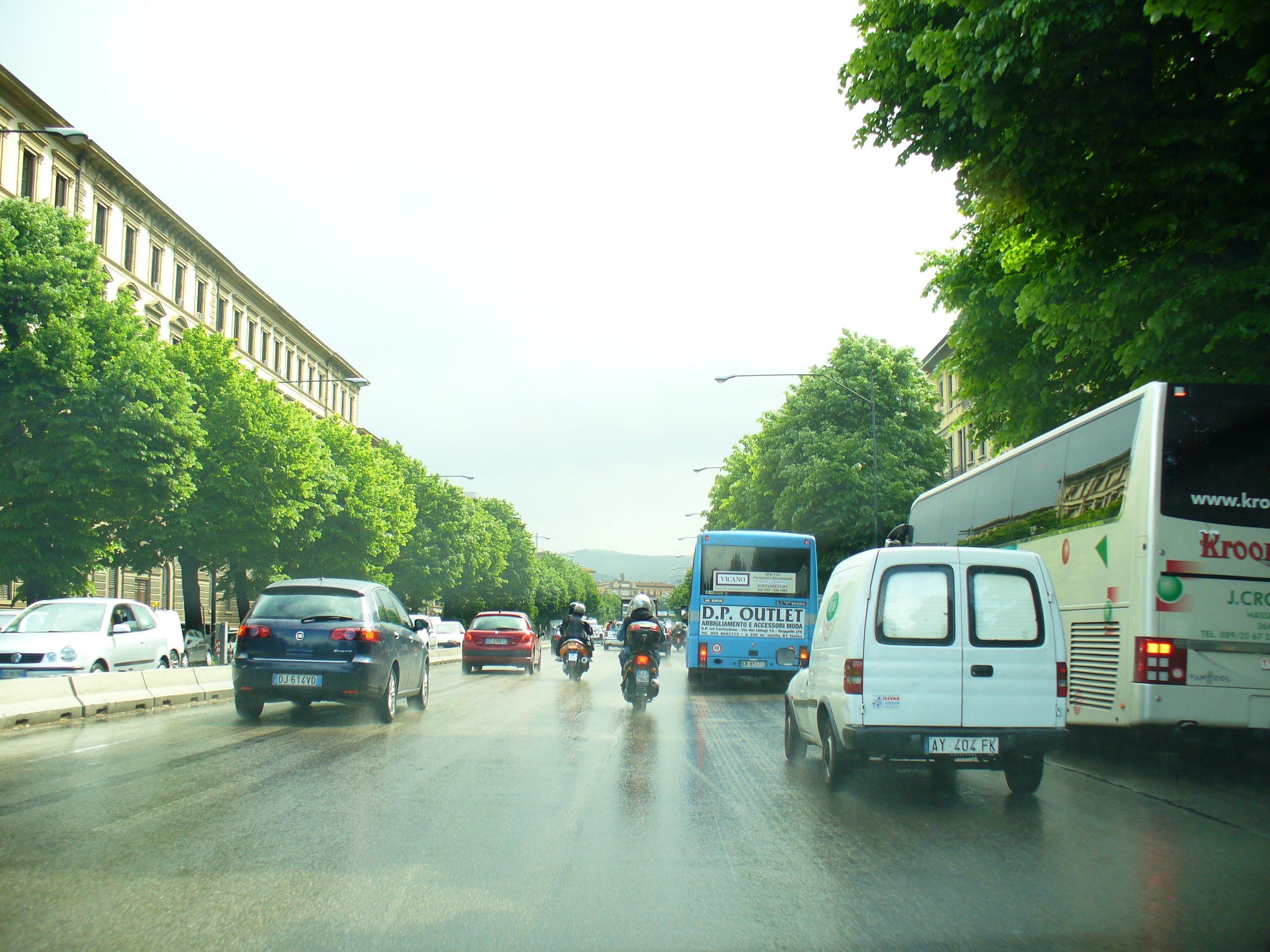
The microclimate function of a boulevard canopy is not a peripheral feature of the viale design — it was a deliberate engineering consideration in 19th-century Italian urban planning, even if the quantification of that function depended on instruments and modelling frameworks unavailable at the time. Contemporary research from Italian universities and the Italian National Research Council has now produced a body of peer-reviewed data that makes it possible to state specific temperature figures and health outcomes attributable to canopy cover. This article summarises the key findings as they apply to the historic boulevard typology.
The Primary Cooling Mechanism: Shading
Research published in Climate (MDPI, 2021) based on fieldwork in Lecce, Southern Italy, identifies shading as the dominant contributor to daytime cooling beneath urban trees. The study's simulation modelling found an average daily air temperature decrease of up to 1.00 °C beneath tree canopy on a typical hot summer day. The shading effect is most pronounced during midday hours, when direct solar radiation on pavement surfaces would otherwise raise surface temperatures to 50–60 °C on an exposed carriageway.
Mean Radiant Temperature (MRT) — the thermal radiation component that most directly determines perceived heat stress for pedestrians — responds more sharply to shade than air temperature does. The Lecce study found MRT improvements of up to 5.53 °C when urban green area increased by 1,266–1,988 m² within a neighbourhood-scale study zone. Translated to thermal comfort indices, this corresponds to a PMV (Predicted Mean Vote) improvement of up to 0.53 units — moving pedestrian conditions from the "warm" to "slightly warm" range during peak summer hours.
Canopy Density and the 30% Threshold
Research published in npj Urban Sustainability (Nature Portfolio, 2025) analysed the relationship between canopy cover percentage and ambient air temperature across a range of European and global cities. The study found that tree canopy cover explains 67% of spatial variation in air temperature at the neighbourhood scale. The quantitative relationship is approximately linear within the 10–30% cover range: each 10% increase in canopy reduces ambient air temperature by approximately 0.8 °C.
At 30% canopy cover — a threshold referenced in Italian urban greening policy targets — the projected air temperature reduction reaches up to 1.5 °C in heat-prone areas. This figure is particularly relevant to boulevard corridors, which typically have higher tree canopy density than surrounding urban tissue: a double-row boulevard with closed canopy will locally exceed 30% cover within the street section, even if the surrounding built blocks are at 5–10%.

Heatwave Mortality and the 10-City Study
A study published through the Italian National Research Council (CNR, 2025), modelling a minimum 30% tree cover scenario across ten Italian cities, found a median reduction in heatwave degree days of 34%, with a range of 16–84% across cities depending on baseline canopy cover and urban morphology. The same study projected comparable reductions of 36% in heatwave-related excess mortality for residents aged 65 and over.
These figures place the historic boulevard network in a direct public health context. A viale with 150-year-old plane trees providing closed canopy over 8–10 metres of pedestrian promenade is not merely an amenity feature — it is measurable heat-mortality infrastructure. The removal or degradation of canopy along these corridors carries a quantifiable health cost during heatwave events, which are increasing in frequency and intensity across the Italian peninsula under current climate trajectories.
Padova: Surface Temperature Differentials
Research from the University of Padova (published in Land, MDPI, 2022) measured daytime temperature differentials between open impervious surfaces and areas under tree canopy in an Italian urban context. The study recorded temperature differences of up to 10 °C between exposed paved surfaces and canopied green spaces at peak afternoon hours. This differential is consistent with surface energy balance modelling: bare asphalt absorbs and re-emits solar radiation efficiently, while a closed tree canopy intercepts direct radiation at canopy level and dissipates it through transpiration and reflection rather than allowing it to heat the pavement below.
The Padova study also confirmed that nighttime conditions under dense tree canopy can be slightly warmer than open spaces, as trees trap long-wave radiation emitted by heated surfaces. This nighttime heat-retention effect is real but secondary in public health terms: heatwave mortality in Italian cities peaks during afternoons and early evenings when outdoor activity is higher, not at night.
Canopy Continuity and Corridor Effects
A single isolated tree produces a localised microclimate benefit within approximately 1–1.5 crown radii in all horizontal directions. A boulevard with continuous canopy closure along its length produces a different-order effect: it creates a shaded corridor in which air temperatures remain lower than surrounding blocks throughout the afternoon, and in which pedestrians can traverse significant distances without exposure to direct solar radiation.
This corridor effect is what distinguishes the historic viale from individual street trees. The Florentine Viali di Circonvallazione, when fully canopied, form a ring of reduced thermal stress around the historic city centre that functions at the neighbourhood scale, not merely the microsite scale. The same logic applies to Milan's ring road system and Turin's Baroque viali: their value as microclimate infrastructure is proportional to their length and canopy continuity, not merely to the number of individual specimens.
Gaps in canopy continuity — produced by tree loss through disease, storm damage, or infrastructure conflicts — create "heat bridges" where pedestrian conditions revert to those of an unshaded street. Research on linear park corridors in several European cities suggests that canopy gaps exceeding approximately 15 metres produce measurable MRT increases at ground level for pedestrians within the gap. This has direct implications for replanting priorities on historic boulevard networks where individual specimens have been lost.
Transpiration and Humidity
Tree canopies also contribute to urban microclimate through transpiration — the evaporation of water from leaf surfaces. A mature Platanus acerifolia specimen transpires an estimated 200–400 litres of water per day during summer growing season under non-drought conditions. This transpiration contributes to local humidity and absorbs latent heat from the surrounding air, providing a modest cooling effect supplemental to shading.
Under drought conditions — increasingly common in Southern and Central Italy — transpirational cooling is reduced as trees enter water-stress response and close their stomata. This means that the cooling performance of a boulevard's canopy is partly a function of subsoil moisture availability, which is in turn affected by pavement coverage around tree pits, utility infrastructure, and irrigation management. Historic viali with generous unpaved verges (as in the Florentine model) maintain better subsoil moisture than sections where carriageway expansion has reduced the planted area around individual trees.
Implications for Replanting Programmes
The quantified microclimate data from the studies cited above supports several practical conclusions for boulevard replanting:
- Canopy continuity matters more than individual specimen size in the short term. A gap-filling planting of a same-species specimen restored to canopy continuity within 15–20 years reduces the heat-bridge effect more than a larger specimen planted further from the gap.
- Species with faster canopy closure rates should be preferred where continuity is the priority. For historic plane tree corridors, same-species replacement preserves the spatial character and continues the genetic lineage of the historic planting.
- Root-zone allocation directly affects long-term cooling performance. Undersized tree pits produce stressed specimens with reduced transpiration and, eventually, smaller crowns — reducing both shading and transpirational cooling over the 50-year lifespan of the planting.
- Night-retention trade-offs are real but secondary. Design decisions should not be made primarily on the basis of nighttime heat retention, as the daytime shading benefit substantially outweighs the nighttime effect for heat-health outcomes.
Primary sources: Urban greening scenarios, Lecce – MDPI Climate (2021) · Tree canopy and urban temperature – npj Urban Sustainability (2025) · Urban heat island, Padova – Land, University of Padova (2022) · Heatwave burden reduction, Italy – CNR (2025)